
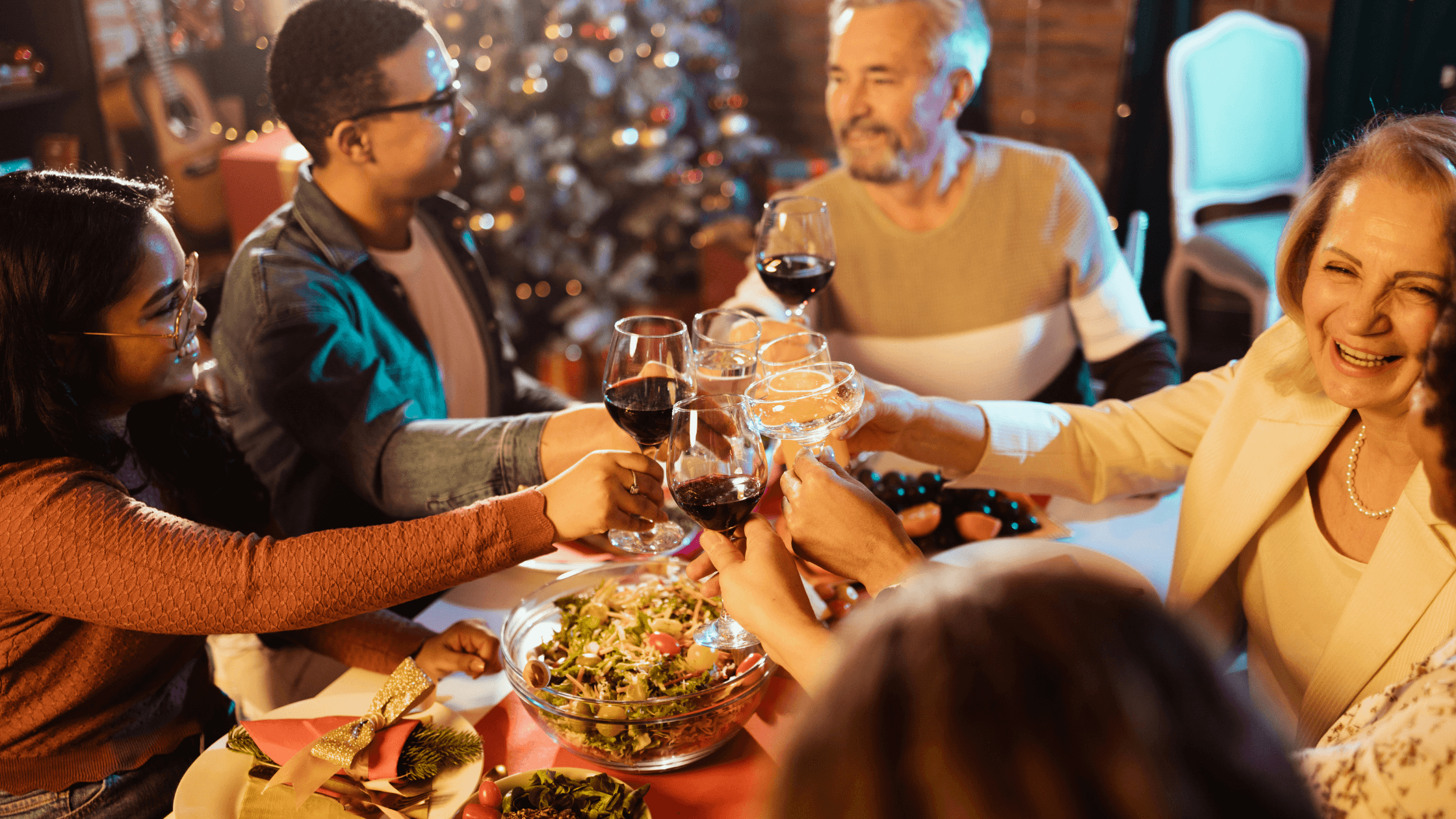





Enjoy the celebrations, savor the flavors — without the post-party slump. The holidays are a time wrapped in warmth, gathering, excitement — and of course, food. Tables fill with festive favorites, desserts arrive on repeat, and indulgence becomes a love language. While sharing meals with loved ones is a beautiful part of the season, many people find themselves riding the sugar rush, only to crash into discomfort, fatigue, reflux, and regret. But here’s the good news: You can enjoy your holiday plate without derailing your energy or your wellness goals. Let’s break down how to eat in a way that feels good during the meal and after the last bite.
1. Start With a Smart Plate — Not a Restrictive One
Restriction often backfires. Instead of telling yourself, "don’t eat this," focus on adding this first.
Build your plate with balance:
Protein first (turkey, chicken, seafood, tofu): keeps blood sugar stable
Fiber-rich vegetables: help digestion + steady hunger
Slow carbs & healthy fats: give sustained energy
Once those are on your plate, add the treats you love. You’re enjoying eating and nourishment simultaneously.
2. Hydrate Between Cocktails, Not After the Damage
Holiday beverages are fun — but they can sneak up on you. Alcohol and sugary drinks dehydrate the body and slow digestion, which contributes to bloating, sluggishness, and headaches the next day.
Try the simple rhythm:
Sip → Water → Sip → Water
Your tomorrow-self will thank you.
3. Slow Down & Savor — Your Gut Digests Better Than You Think
Most holiday discomfort isn’t from overeating —
It’s from eating too fast.
Mindful eating looks like:
Chewing thoroughly
Putting the fork down between bites
Savoring the flavors and conversation
Pleasure increases, overeating decreases. Win–win.
4. Don’t Skip Meals to “Save Calories" — It Backfires Every Time
Arriving at a holiday dinner starving is like grocery shopping hungry — everything looks irresistible. Skipping meals often leads to overeating, blood sugar dips, and that heavy crash afterward.
Instead:
Eat breakfast.
Have a balanced lunch.
Walk into dinner balanced, not ravenous.
Your plate stays reasonable, and your energy does too.
5. Support Digestion After Your Meal
A few small habits can make a big difference:
Take a short 10–20 minute walk after eating
Drink warm water or peppermint tea
Try digestive enzymes if recommended by your provider
Choose lighter meals the next morning to reset gently
Your body wants to feel good — give it that chance.
Enjoy the Holiday — Without the Crash
Holiday food is meant to be enjoyed, not feared.
You don’t need to skip dessert, avoid the buffet, or say no to the foods that make the season memorable. You just need balance, awareness, and small habits that protect your energy.
Because you deserve to celebrate joyfully — not crash halfway through the night.
Enjoy the celebrations, savor the flavors — without the post-party slump. The holidays are a time wrapped in warmth, gathering, excitement — and of course, food. Tables fill with festive favorites, desserts arrive on repeat, and indulgence becomes a love language. While sharing meals with loved ones is a beautiful part of the season, many people find themselves riding the sugar rush, only to crash into discomfort, fatigue, reflux, and regret. But here’s the good news: You can enjoy your holiday plate without derailing your energy or your wellness goals. Let’s break down how to eat in a way that feels good during the meal and after the last bite.
1. Start With a Smart Plate — Not a Restrictive One
Restriction often backfires. Instead of telling yourself, "don’t eat this," focus on adding this first.
Build your plate with balance:
Protein first (turkey, chicken, seafood, tofu): keeps blood sugar stable
Fiber-rich vegetables: help digestion + steady hunger
Slow carbs & healthy fats: give sustained energy
Once those are on your plate, add the treats you love. You’re enjoying eating and nourishment simultaneously.
2. Hydrate Between Cocktails, Not After the Damage
Holiday beverages are fun — but they can sneak up on you. Alcohol and sugary drinks dehydrate the body and slow digestion, which contributes to bloating, sluggishness, and headaches the next day.
Try the simple rhythm:
Sip → Water → Sip → Water
Your tomorrow-self will thank you.
3. Slow Down & Savor — Your Gut Digests Better Than You Think
Most holiday discomfort isn’t from overeating —
It’s from eating too fast.
Mindful eating looks like:
Chewing thoroughly
Putting the fork down between bites
Savoring the flavors and conversation
Pleasure increases, overeating decreases. Win–win.
4. Don’t Skip Meals to “Save Calories" — It Backfires Every Time
Arriving at a holiday dinner starving is like grocery shopping hungry — everything looks irresistible. Skipping meals often leads to overeating, blood sugar dips, and that heavy crash afterward.
Instead:
Eat breakfast.
Have a balanced lunch.
Walk into dinner balanced, not ravenous.
Your plate stays reasonable, and your energy does too.
5. Support Digestion After Your Meal
A few small habits can make a big difference:
Take a short 10–20 minute walk after eating
Drink warm water or peppermint tea
Try digestive enzymes if recommended by your provider
Choose lighter meals the next morning to reset gently
Your body wants to feel good — give it that chance.
Enjoy the Holiday — Without the Crash
Holiday food is meant to be enjoyed, not feared.
You don’t need to skip dessert, avoid the buffet, or say no to the foods that make the season memorable. You just need balance, awareness, and small habits that protect your energy.
Because you deserve to celebrate joyfully — not crash halfway through the night.
Ready to feel good during and after the holidays?
Ready to feel good during and after the holidays?
Ready to feel good during and after the holidays?
Take control of your wellness with support and guidance tailored to you.
Take control of your wellness with support and guidance tailored to you.
Search
Search
Search
Search
Table of Content
Table of Content
What’s Trending
What’s Trending

Your Body Has Its Own Birthday: What Glucose, Inflammation, Muscle, and Fitness Reveal About How Fast You're Actually Aging
Your Body Has Its Own Birthday: What Glucose, Inflammation, Muscle, and Fitness Reveal About How Fast You're Actually Aging
Why Your Body Forgot How to Switch Fuel Sources (And How to Get It Back on Track)
Why Your Body Forgot How to Switch Fuel Sources (And How to Get It Back on Track)

What PCOS, PMDD, and Perimenopause Have in Common—And Why Understanding the Connection Can Transform Your Health and Weight Loss Journey?
What PCOS, PMDD, and Perimenopause Have in Common—And Why Understanding the Connection Can Transform Your Health and Weight Loss Journey?
Our Recent Blogs
Our Recent Blogs
The Weight Loss Journal
The Weight Loss Journal
The Weight Loss Journal



Chioma Okafor-Mbah Gomez MD PLLC


Quick Links
Copyright © 2025 Chioma Okafor-Mbah Gomez, MD PLLC - All Rights Reserved
Chioma Okafor-Mbah Gomez MD PLLC
Quick Links
Copyright © 2025 Chioma Okafor-Mbah Gomez, MD PLLC - All Rights Reserved